
Driverless and semi-autonomous vehicles are no longer a distant concept. They are operating on public roads today, and when they are involved in crashes, the question of legal responsibility becomes far more complicated than in a conventional car accident. Determining who is liable depends on how the technology failed, who was in the vehicle, and how it was designed and maintained. The Wilmington car accident lawyers at McCann Dillon Jaffe & Lamb, LLC, handle complex vehicle accident claims and can help you understand your options if you were hurt in a crash involving an autonomous vehicle.
How Do Autonomous Vehicles Work, and Why Does It Matter for Liability?
Autonomous vehicles rely on sensors, cameras, artificial intelligence, and software to navigate roads without direct human input. The National Highway Traffic Safety Administration (NHTSA) classifies vehicle automation on a scale from Level 0, which involves no automation, to Level 5, which represents full autonomy with no need for human control. Most vehicles currently on public roads operate at Level 2 or Level 3, meaning a human driver is still expected to monitor the system and intervene when needed.
This distinction matters for liability. At lower automation levels, a human driver who fails to intervene when the system requires it may bear responsibility. At higher automation levels, such as 4 and 5, responsibility could shift toward the manufacturer or software developer when something goes wrong.
Who Can Be Held Liable in a Driverless Car Accident?
A crash involving an autonomous vehicle may involve multiple parties, each with a different degree of responsibility.
The vehicle manufacturer: If a hardware defect caused the crash, the manufacturer may be liable under products liability law. This could include defective sensors, braking systems, or structural components. Products liability claims focus on whether the product was unreasonably dangerous, not just whether someone acted negligently.
The software developer: A flaw in the code can cause a vehicle to misread road conditions or fail to detect obstacles. If a software error contributed to the crash, the company that developed or updated the system may share liability.
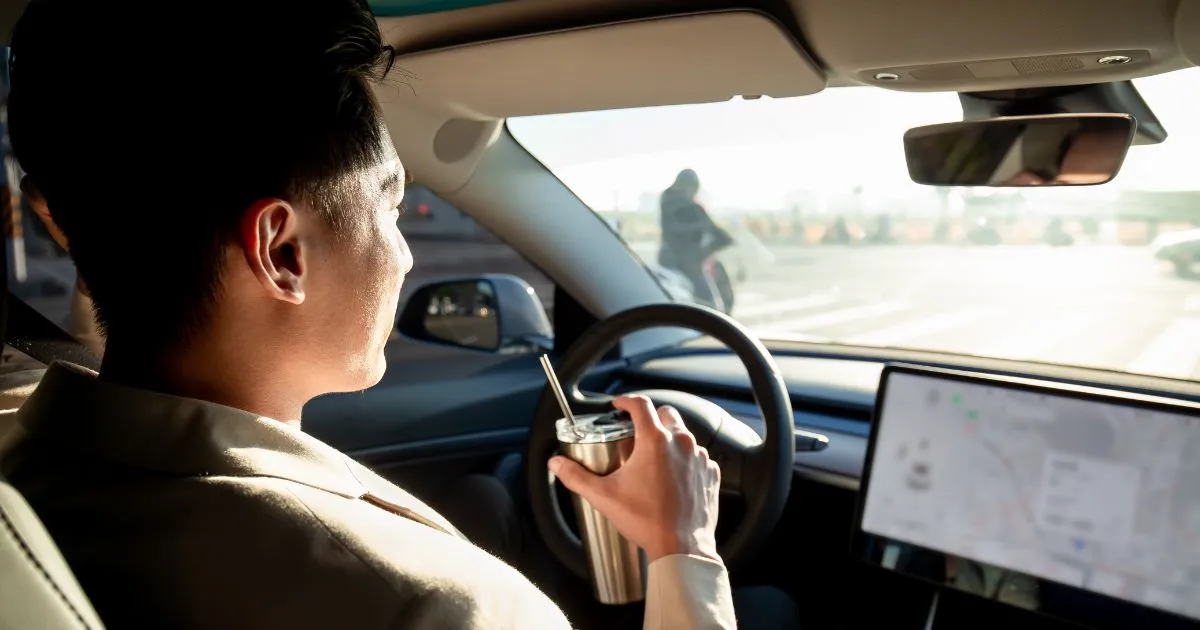
The human operator: Even in highly automated vehicles, an occupant may be expected to monitor the system and intervene when necessary. If the operator was required to maintain attention and failed to do so, liability may fall on that individual. This remains one of the most disputed areas in autonomous vehicle litigation.
A third-party maintenance provider: Autonomous vehicles require regular calibration and software updates. If faulty service contributed to the crash, the maintenance company may also face liability.
A government entity: If a poorly maintained roadway or malfunctioning traffic signal played a role in the accident, a government entity may bear partial responsibility. Claims against government bodies involve specific procedural requirements and shorter filing deadlines.
How Is Fault Investigated in an Autonomous Vehicle Crash?
Investigating a driverless car accident is significantly more complex than a standard collision. These vehicles generate large amounts of data, such as sensor logs, GPS records, camera footage, and system diagnostics, that can be critical to establishing what happened. Preserving this data quickly is essential, as manufacturers may access or update vehicle systems remotely after a crash.
The National Transportation Safety Board investigates serious autonomous vehicle crashes and publishes findings that can be relevant to civil claims. Their findings could be helpful to your case when you are trying to pinpoint liability, although you may also need additional evidence.
What Legal Standards Apply to Driverless Car Accident Claims?
Driverless car accident claims may be pursued under negligence law, products liability law, or both, depending on the cause of the crash. Negligence applies when a human operator or maintenance provider fails to exercise reasonable care. Products liability applies when a defect in the vehicle or its software makes it unreasonably dangerous. In many cases, both theories are pursued simultaneously against multiple defendants, requiring thorough investigation and experienced legal representation from the outset.
Wilmington Car Accident Lawyers at McCann Dillon Jaffe & Lamb, LLC, Are in Your Corner
The Wilmington car accident lawyers at McCann Dillon Jaffe & Lamb, LLC, are ready to help you pursue the compensation you deserve if you were injured in a crash involving a driverless or semi-autonomous vehicle. Reach out to us today for a free consultation by calling 215-569-8488 or contacting us online. We have offices in Philadelphia and Abington, Pennsylvania, as well as Haddonfield, New Jersey, and Wilmington, Delaware.